
Home Cooling
How to Choose the Right AC for Your Home
March 22, 2026 · 10 min read
Key Takeaways
- Central AC is best for homes with existing ductwork — most efficient for whole-home cooling
- Ductless mini-splits suit older homes, additions, and rooms without ducts
- SEER2 ratings of 16+ offer the best long-term savings for Ontario's climate
- Proper sizing matters more than brand — oversized units waste energy and under-dehumidify
In This Article
Choosing an air conditioner isn't just about picking a brand — it's about matching the right system type, size, and efficiency level to your home's specific needs. A 1,200 sq ft bungalow in Mississauga has different requirements than a 3,000 sq ft two-storey in Markham. This guide walks through the key decisions so you can get a system that cools effectively, runs efficiently, and fits your budget.
Types of Air Conditioners for GTA Homes
Central Air Conditioning
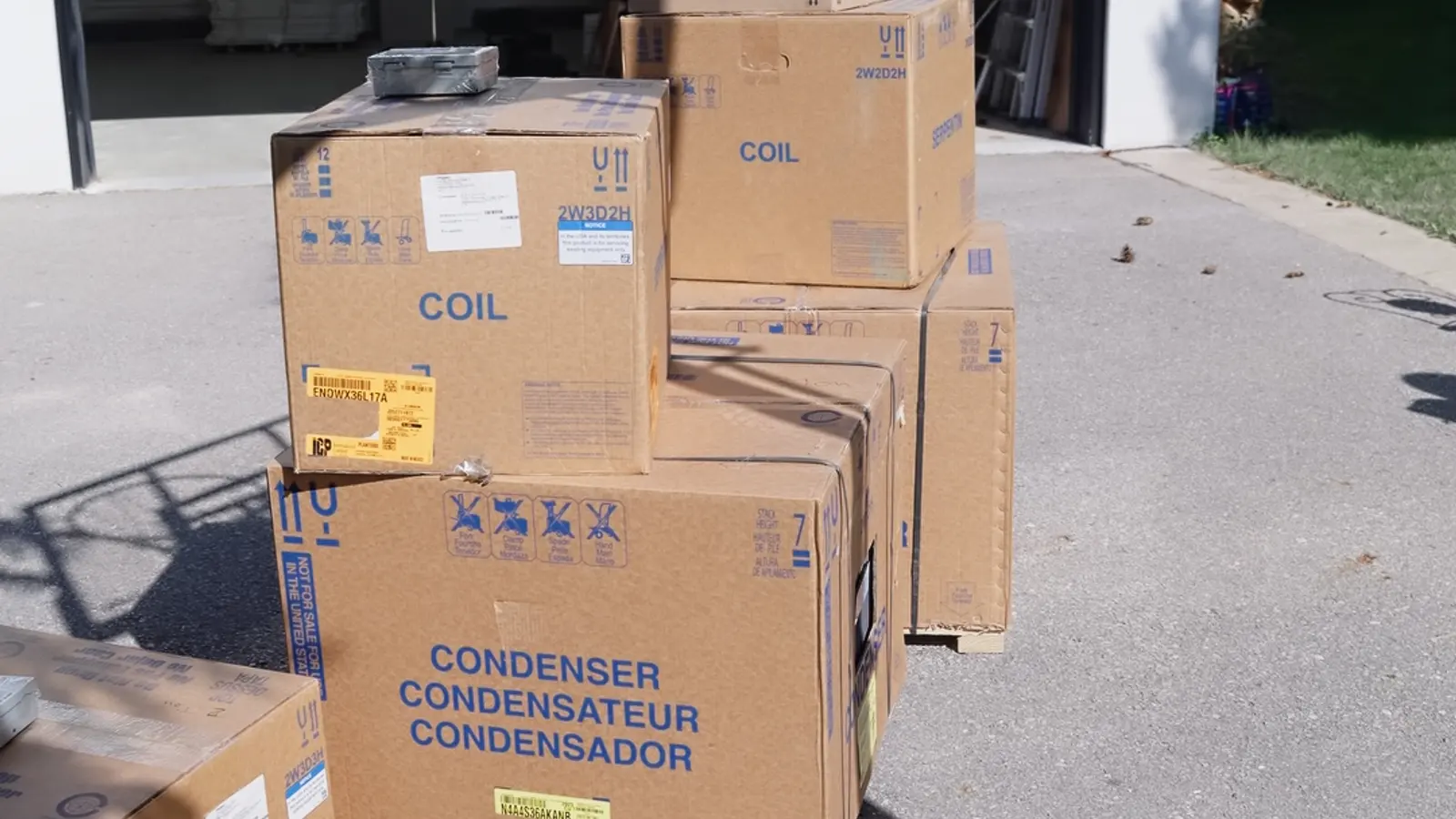
Central AC uses your home's existing ductwork to distribute cooled air through supply registers in every room. The outdoor condenser unit connects to an indoor evaporator coil mounted on your furnace. This is the most common setup in GTA homes built after 1970 and offers the best efficiency for whole-home cooling. Installation runs $4,500–$7,000 including the indoor coil, refrigerant lines, and electrical work.
Ductless Mini-Split
Mini-splits use individual wall-mounted indoor units connected to an outdoor compressor by refrigerant lines — no ductwork needed. Each indoor unit has its own thermostat, giving you zone-by-zone temperature control. They're ideal for older homes without ducts, home additions, converted garages, and rooms that are consistently too warm. A single-zone system costs $3,500–$5,500 installed; multi-zone setups (2–4 heads) run $7,000–$15,000. For a deeper look, read our guide to ductless AC.
Heat Pump (Cooling + Heating)
A heat pump is an air conditioner that reverses — it cools in summer and heats in winter using the same compressor. Modern cold-climate heat pumps work efficiently down to –25°C, making them viable as primary heating in Southern Ontario. The upfront cost is 20–30% more than a standard AC, but the energy savings in shoulder seasons (spring and fall) offset that premium within 3–5 years for most households.
Understanding SEER2 Ratings
SEER2 (Seasonal Energy Efficiency Ratio 2) measures cooling output per unit of electricity over a typical cooling season. Higher numbers mean lower operating costs. As of January 2023, the minimum efficiency for new AC equipment sold in Canada is 14.3 SEER2.
| SEER2 Rating | Category | Annual Cooling Cost* |
|---|---|---|
| 14.3 | Minimum efficiency | ~$480 |
| 16 | Mid-efficiency | ~$430 |
| 18–20 | High-efficiency | ~$340–$380 |
| 21+ | Premium (variable-speed) | ~$300 |
*Estimated for a typical 2,000 sq ft GTA home at current Ontario electricity rates.
For more detail on what efficiency level makes financial sense, see our article on what SEER rating you actually need.
Getting the Right Size
AC capacity is measured in tons (1 ton = 12,000 BTU/hr). The correct size depends on your home's square footage, insulation quality, window area, sun exposure, and ceiling height. A Manual J load calculation — which any reputable installer should perform — determines the exact tonnage.
As a rough guide for GTA homes with average insulation:
- 1,000–1,400 sq ft: 2–2.5 tons
- 1,400–2,000 sq ft: 2.5–3 tons
- 2,000–2,600 sq ft: 3–3.5 tons
- 2,600–3,200 sq ft: 3.5–4 tons
Oversizing is worse than undersizing. An oversized AC cools quickly but shuts off before properly dehumidifying, leaving your home clammy and uncomfortable. It also short-cycles, which wears out the compressor faster. For a complete sizing walkthrough, read what size air conditioner do I need.
Cost Comparison by Type
| System Type | Installed Cost (GTA) | Best For |
|---|---|---|
| Central AC (single-stage) | $4,500–$6,000 | Homes with ductwork, budget-focused |
| Central AC (two-stage/variable) | $5,500–$8,000 | Comfort-focused, energy savings |
| Ductless mini-split (1 zone) | $3,500–$5,500 | Single rooms, no ductwork |
| Ductless multi-zone (3–4 heads) | $8,000–$15,000 | Whole-home, no ductwork |
| Heat pump | $6,000–$10,000 | Year-round heating + cooling |
Features Worth Paying For
- Variable-speed compressor: Runs at partial capacity most of the time, reducing temperature swings, noise, and energy use. Worth the premium in homes where comfort matters.
- Two-stage cooling: A simpler version of variable-speed with low and high settings. Good middle ground between cost and comfort.
- Smart thermostat compatibility: Most modern systems support Wi-Fi thermostats, but confirm compatibility before purchasing.
- Sound rating under 72 dB: Important if the condenser is near a bedroom window or property line. Premium units run as quiet as 56 dB.
Frequently Asked Questions
What brand of AC is the most reliable?
KeepRite and Midea offer excellent reliability and value in the Canadian market. Lennox is a premium option with strong brand recognition. For ductless and heat pump applications, Mitsubishi is the premium choice. Brand matters less than proper sizing and quality installation — a perfectly sized Midea unit installed by a skilled technician will outperform an oversized premium system every time.
How long does AC installation take?
A straightforward replacement (same location, existing ductwork) takes 4–8 hours. New installations that require ductwork, electrical upgrades, or concrete pad work can take 1–2 days. Ductless mini-split installations typically take 4–6 hours for a single zone.
Should I get a quote from more than one contractor?
Yes — get at least three written quotes. Compare not just price but also the equipment specified, warranty terms, included accessories (thermostat, pad, disconnect), and whether a Manual J load calculation is included. The lowest price isn't always the best value.
Find the Right System for Your Home
The best air conditioner is the one that's properly sized, properly installed, and matched to how you actually use your home. Request a free in-home assessment and we'll recommend the right system for your space, budget, and comfort priorities.