
Tips & Tricks
Why Annual HVAC Maintenance Matters More Than You Think
March 28, 2026 · 8 min read
Key Takeaways
- Skipping maintenance reduces furnace efficiency by 5% per year — compounding to 20%+ in 4 years
- 80% of HVAC breakdowns are preventable with regular maintenance
- Most manufacturer warranties require proof of annual professional service
- A $150 tune-up prevents $500–$2,000 emergency repairs
You change your car's oil every 5,000 km without thinking twice. But most homeowners skip the equivalent maintenance on the system that keeps their family comfortable 365 days a year. Here's the real cost of neglecting your HVAC system — and why a simple annual tune-up is one of the best investments you can make.
The Hidden Cost of Skipping Maintenance
A new furnace operates at its rated efficiency — say 96% AFUE for a high-efficiency model. Without maintenance, that number drops roughly 5% per year. After 4 years of neglect, your 96% furnace operates like an 80% furnace. On a $2,000 annual gas bill, that's $320 wasted every year — and the gap widens each season.
The same applies to air conditioners. A dirty evaporator coil reduces cooling capacity by 20–30%. Your AC runs longer, consumes more electricity, and still can't reach the set temperature on hot days.
What Happens During a Professional Tune-Up
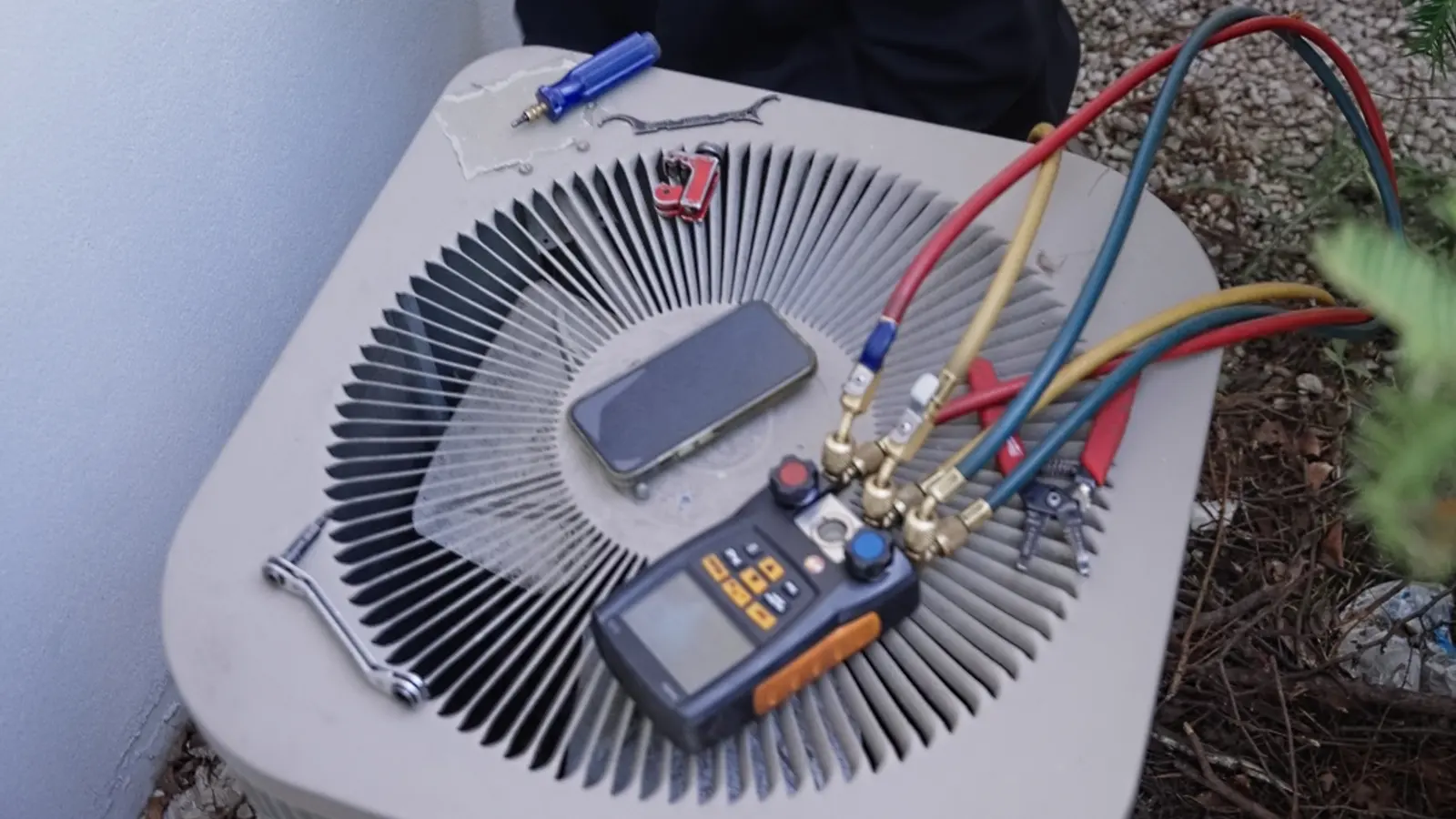
A proper HVAC maintenance visit isn't just changing the filter. A technician performs 20+ checks:
- Combustion analysis: Measures gas-to-air ratio — incorrect ratios waste fuel and produce carbon monoxide
- Heat exchanger inspection: Checks for cracks that leak CO into your living space
- Electrical connections: Tightens loose connections that cause intermittent failures and fire risk
- Blower motor amperage: A motor drawing excessive amps is on borrowed time
- Thermostat calibration: Verifies the temperature reading matches actual room temperature
- Safety controls: Tests limit switches, pressure switches, and flame sensors
- Condensate drain: Clears blockages that cause water damage and system shutdowns
Breakdowns Don't Happen Randomly
HVAC technicians see the same pattern every winter: systems that haven't been serviced in 2–3 years fail during the first cold snap. The furnace was working "fine" in October. By December, the cracked igniter that a tune-up would have caught snaps under thermal stress. Now it's -20°C and you're waiting for an emergency call — at twice the normal rate.
Industry data shows 80% of HVAC failures are preventable with maintenance. The most common culprits: dirty flame sensors (10-minute fix during a tune-up), clogged condensate drains (15-minute fix), and capacitor degradation (caught by amp testing). All of these are checked during a standard maintenance visit.
Your Warranty Probably Requires It
Read your furnace or AC warranty carefully. Most manufacturers — Lennox, Carrier, Goodman, Trane — require proof of annual professional maintenance to honour warranty claims. A failed heat exchanger on a 5-year-old furnace should be covered under warranty. Without maintenance records, the manufacturer can deny the claim. That's a $1,500–$3,000 expense that should have been $0.
Equipment Lifespan: Maintained vs. Neglected
A well-maintained furnace lasts 20–25 years. A neglected one fails at 12–15. That's 8–10 extra years of service from a $4,000–$6,000 investment — simply by spending $150/year on maintenance. The math isn't even close.
Air conditioners show an even more dramatic difference. Maintained units last 15–20 years. Neglected units — running with dirty coils, low refrigerant, and overworked compressors — fail at 8–12 years. A cooling maintenance plan extends the life of a $5,000+ investment.
Safety: The Most Important Reason
A cracked heat exchanger leaks carbon monoxide — an odourless, colourless gas that kills. Annual maintenance includes a combustion analysis and heat exchanger inspection that catches cracks before they become dangerous. This alone justifies the cost of a tune-up.
When to Schedule Maintenance
- Furnace/heating: September or October — before the heating season starts
- AC/cooling: April or May — before you need it
- Heat pump: Twice yearly — it runs year-round
- Water heater: Annually — flush sediment and test the pressure relief valve
Frequently Asked Questions
Can I do HVAC maintenance myself?
You can change filters, clear debris from the outdoor unit, and keep vents unblocked. But combustion analysis, electrical testing, refrigerant checks, and heat exchanger inspections require a licensed technician with specialized equipment.
How much does an annual tune-up cost?
A single-system tune-up typically costs $100–$200. A maintenance plan that covers both heating and cooling visits costs $200–$350/year and often includes priority scheduling and repair discounts.
My system seems fine — do I still need maintenance?
Most HVAC failures show no symptoms until they happen. A flame sensor that's 90% coated in buildup works perfectly until it doesn't. A capacitor losing charge runs the motor fine in October but fails under load in July. Maintenance catches these before they strand you without heat or cooling.
Protect Your Investment
Your HVAC system is the most expensive mechanical system in your home. Treat it like one. Book your annual tune-up or call 1-855-539-4328 to get on the schedule before the season rush.